In this article
Volunteer at Sukamade: Join the Turtle Conservation Program
Sukamade is one of the few places in Indonesia where you can spend your holiday working shoulder-to-shoulder with national park rangers on a real conservation program. The volunteer program at Sukamade has been running for over 40 years — the same program that has kept this beach's turtle population stable while many others across Java collapsed.
Note
The Volunteer Program runs on placements of 3+ days. You work alongside the Meru Betiri rangers in their daily routine — no experience required, just a willingness to learn and a respect for the animals.
About the Sukamade Volunteer Program
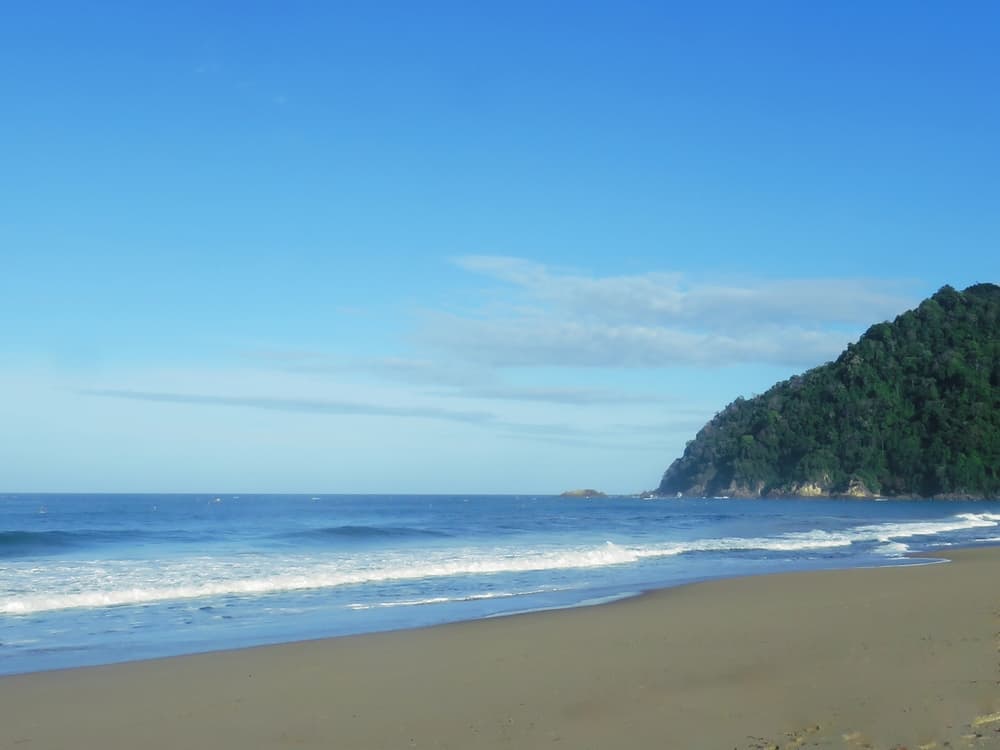
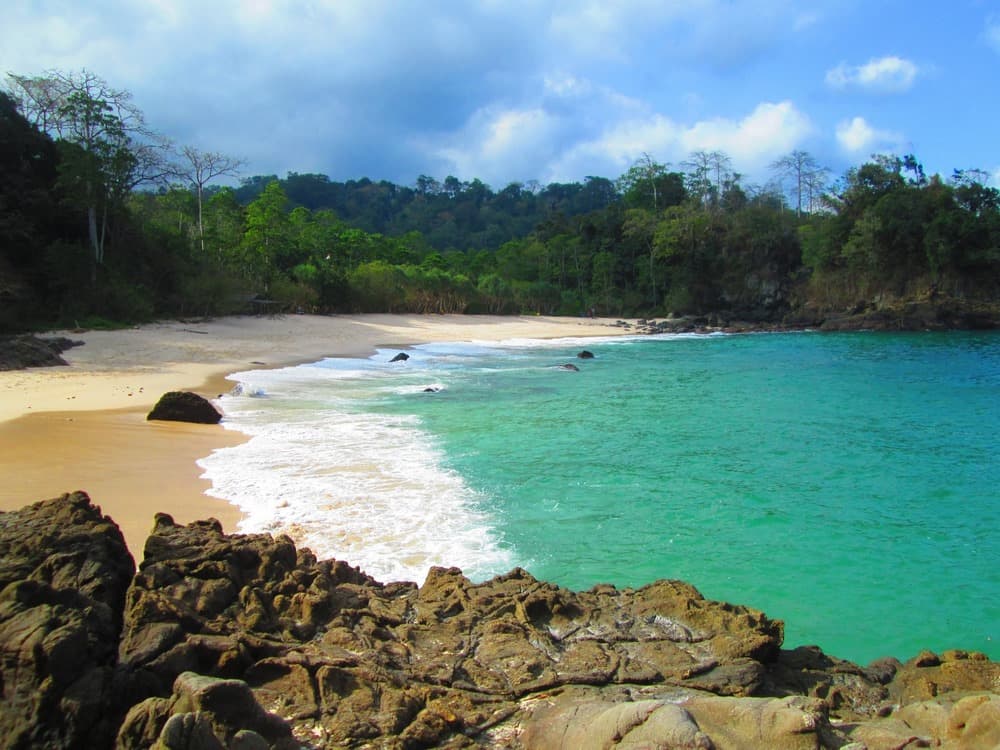
Sukamade is a turtle nesting beach inside Meru Betiri National Park, Banyuwangi, East Java. The volunteer program here has been running for over 40 years — since the ranger station was established in the 1980s — making it one of the longest-running sea turtle conservation programs in Indonesia.
Unlike a regular tour, volunteers work directly within the rangers' daily routine: night patrols, nest relocations, incubation temperature monitoring, and conservation education for school groups from Banyuwangi. Four turtle species nest on this beach year-round.
Why Volunteer at Sukamade
- Real contribution — every night patrol you join helps prevent egg poaching and protects nests.
- Learn directly from rangers — they have monitored this beach for decades and know every turtle that returns.
- A rare experience — work inside a conservation station within a national park, not just watch from a distance.
- Local community — volunteer income supports ranger families and the fishing village of Sarongan.
What Volunteers Do
No two days are the same, but a typical placement rotates through the core conservation tasks:
- Night patrols — walking the 3-kilometer beach with rangers, spotting fresh tracks, and protecting nesting turtles from disturbance.
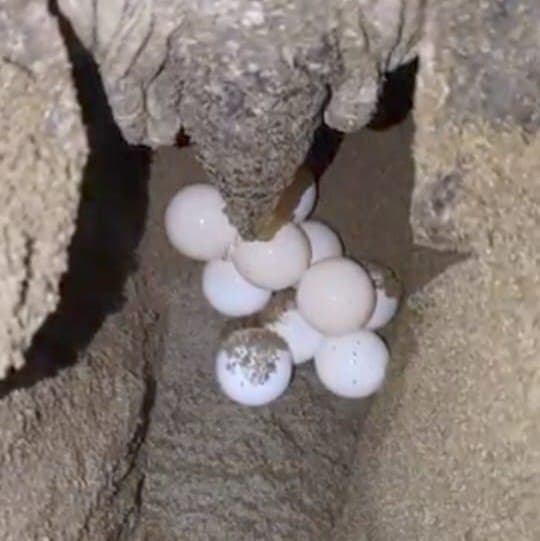
- Hatchery work — relocating at-risk nests, monitoring incubation temperatures, and preparing hatchlings for release.
- Nest monitoring — recording clutch sizes, checking hatching success rates, and updating the daily log that has run since the 1980s.
- Data entry — helping rangers digitize tagging records and patrol observations.
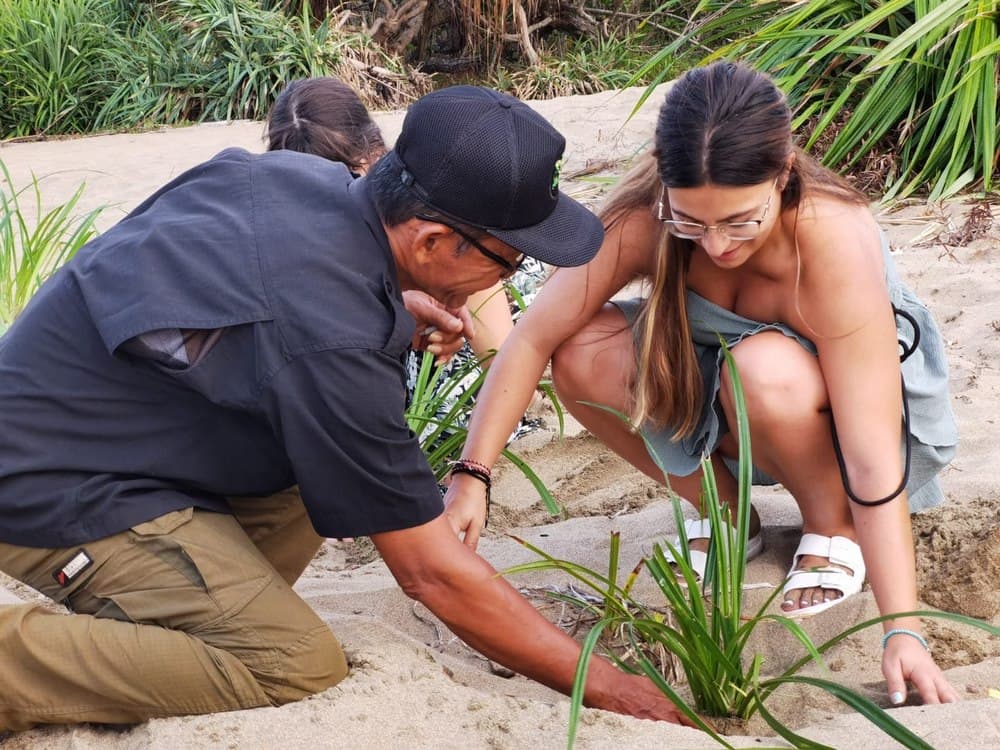
- Community projects — beach cleanups, pandan planting to stabilize dunes, and conservation education with school groups from Banyuwangi.
A Day as a Volunteer
A typical volunteer day at Sukamade
Day One
- 14.00Arrive at Sukamade — orientation and safety briefing with the head ranger
- 16.00Explore the beach and the area around the station
- 19.00Shared dinner in the communal dining room
- 20.00Night turtle patrol with the rangers
Day Two
- 05.00Morning beach patrol — check tracks and new nests
- 08.00Breakfast, then hatchery / data entry tasks
- 10.00Community project or conservation education
What to Expect
Accommodation: You stay at the ranger station guesthouse — the same basic rooms as visitors: mattress on the floor, mosquito net, and shared bucket-shower bathrooms. Solar power runs a few hours each evening. This is a working station, not a resort.
Meals: Simple Indonesian food three times a day, cooked by the ranger kitchen — nasi goreng, mie goreng, tempe, and vegetables. Vegetarian options are available if you let the station know in advance.
Work rhythm: The most demanding work happens at night, when the turtles come ashore. Days are a mix of hatchery tasks, maintenance, and rest before the evening patrol. You will be tired in a way that feels genuinely earned.
Tip
Bring a red-light headlamp, insect repellent, and a reusable water bottle. See the full packing checklist for a complete gear list.
The Cost
Volunteer placements are arranged individually — contact us on WhatsApp for current pricing, which depends on the length of your stay and what is included. As a guide, the main tour packages give you a sense of the base costs at Sukamade:
| Package | Price |
|---|---|
| Turtle Observation Tour | IDR 850,000 |
| Private Expedition | IDR 1,500,000 |
| Hatchling Release Only | IDR 350,000 |
Volunteers who join through a tour package get their placement built into the itinerary. The Volunteer Program itself is the only activity not covered by standard packages — it is priced separately and custom-planned.
How to Apply
- Message us on WhatsApp with your preferred dates and how long you want to volunteer.
- We confirm availability with the ranger station — there are limited volunteer slots per month.
- Plan your journey to Sukamade (we arrange the 4WD transport from Banyuwangi).
- Arrive and meet the rangers — your placement starts with a full orientation and safety briefing.
Tips for Volunteering
- Come in peak season (December–February) to see the highest nesting activity.
- Get in shape — night patrols walk 3 km on sand, and the 4WD journey is rough.
- Bring your own gear — red-light headlamp, insect repellent, and a reusable water bottle.
- Respect ranger rules — no white light, no flash, and keep your distance from turtles.
- Plan at least 3 days — day one is orientation; the real work starts after that.
Do I need conservation experience to volunteer?
No. All tasks are taught by the rangers on site. All you need is a willingness to learn and respect for the wildlife.
What is the minimum volunteer placement?
Placements are at least 3 days. The longer you stay, the deeper your involvement — from night patrols to community projects.
Can children join the volunteer program?
This program suits adults and teenagers because it involves night work and physical effort. Families with young children are better suited to a regular tour.
Where do volunteers stay during the program?
At the Sukamade ranger station guesthouse — simple rooms with a mattress, mosquito net, and shared bathroom. Solar power runs a few hours each evening.
“One week at Sukamade changed how I see conservation. Night patrols with the rangers were the most meaningful experience of my year traveling in Indonesia.”

Local travel consultant in Sarongan Village, Meru Betiri National Park. We plan authentic, responsible turtle tours — 4x4 jungle access, ranger night patrols, and hatchling releases — with local guides who live here.